





Meaning of quantum meruit
Quantum meruit is a Latin term meaning ‘the amount deserved’ or ‘what the job is worth’. It is used to refer to a claim for a reasonable sum, such as when a contractor seeks payment for work which has not been determined by a contract. If there is a contract that entitles one party to receive an agreed or reasonable sum from the other then the law of contract applies and a claim for quantum meruit cannot be used.
A claim may arise in circumstances, including:
- Where there is a quasi-contract (e.g. where some contractual terms have been agreed but price has not).
- Where no price has been fixed.
- Where there is work done that falls outside the contract.
- Where there is work done under a void or unenforceable contract.
The contractor must demonstrate that the employer requested, either expressly or impliedly, the work to be done, or freely accepted it. However, in practice, it can prove difficult for the contractor to prove the exact amount of their entitlement under the principle of quantum meruit.
There are no stipulations as to how the reasonable sum is to be assessed as circumstances often differ. The assessment of a claim for quantum meruit in the absence of a contract will differ from the assessment of a reasonable sum to be paid within a contractual framework. Where work done outside an existing contract gives rise to a quantum meruit claim, the contractor should be paid at a fair commercial rate rather than as though it had been performed under the contract (which may be a different rate).
Evidence that can prove useful to a claim includes:
- Any abortive negotiations relating to price.
- The prices in a related contract.
- Calculations based on the net cost of labour and materials.
- Expert opinions regarding what constitutes a reasonable sum.
[edit] Related articles on Designing Buildings Wiki
- Construction contract.
- Contract conditions.
- Contract law.
- Contract sum.
- Defined cost.
- Difference between lump sum and measurement contracts.
- Disallowed cost.
- Glossary of property law terms.
- Letter of intent.
- Loss and expense.
- Payment for extra work.
- Remeasurement.
- Retention.
- Right to payment.
- The distinction between liquidated damages clauses and penalty clauses.
Featured articles
Check out some of the best features and news from Designing Buildings as well as key stories from around the web.

New Prime Minister delivers on ECA call for cut in electricity costs.

CIOB reacts to the announcement of Andy Burnham as Prime Minister.

Heritage and conservation science workforce survey - Have your say.

England's Suburbs 1820-2020. Book review.

New, more proportionate and targeted approach for higher-risk building assessments.

Government brings British Steel into public ownership.

UKCW Birmingham returns with bold new theme and focus.

New guidance published on competence requirements for self-certification schemes.
Construction Management, 8 July

NEETs crisis drives interest in trades, but apprenticeships barriers remain.
Passive fire protection webinar
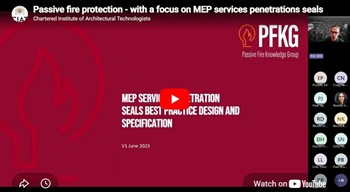
MEP services penetration seals.

Where its at podcast (and video) - The role of the Architectural Technologist as an Expert Witness.

More than 200 remarkable buildings added to SAVE’s Buildings at Risk register.